Pam Rivera believes in Energy Efficiency for All — and she’s making it a reality

  • 11/02/2020 10:00 am ET George Duval
'Community by community': A conversation with Pam Rivera

courtesy of Pam Rivera

Activist and community outreach advocate Pam Rivera has spent her career helping those who need it the most. She started out doing campaign work, then moved on to become the community outreach specialist for the Salvation Army in Gainesville. Rivera now works with the Natural Resources Defense Council (NRDC), fighting to bring affordable energy to low-income communities.

Front Page Live recently sat down with Rivera over Zoom, to discuss her work with the NRDC, how to talk about climate change with the Latinx community, and finding inspiration.

Energy efficiency for all

As the Southeastern Regional and Equity Lead for the NRDC, Pam leads the Energy Efficiency for All program, which works to bring affordable energy to underserved communities.

We felt there was a gap in how people, especially people who live in multifamily affordable housing, were getting serviced by their utility companies, and their policymakers, in terms of getting affordable energy, which really has a huge impact on their budget.

The program uses a “top down-bottom up” approach, by mingling with policymakers and utility providers on one end, and members of low-income communities on the other. They advocate for energy reform with utility companies and policymakers to help bring affordable energy to those that need it, and also provide individual families with energy-efficient appliances and building upgrades to help lower energy costs.

“We primarily focus on what can be upgraded, your insulation on your windows, appliances that are ENERGY STAR®, better water flow toilets…which doesn’t sound sexy or exciting…but it’s such a cost-efficient way to make huge changes to people’s individual pocketbooks

Helping low-income families get affordable energy is one of the many frontiers of the environmental justice movement. Rivera works with an intersectional cast of organizations, which all tackle a wide range of issues in the realm of environmentalism and low-income housing.

The things they’re focused on go further…than energy efficiency or affordable housing. They do touch upon some of those other aspects, like green spaces, and ensuring that communities have access to healthy foods, and ensuring that they have access to safe spaces for children…it’s a really symbiotic relationship between all of these things.”

The Energy Efficiency for All program also works with home builders, providing them with guidance on sustainable building materials for insulation, to help lower energy costs while using non-toxic materials.

Growing up and becoming an activist

Rivera is a first-generation immigrant, whose parents came to the U.S. from Colombia to escape drug-related violence. She has three sisters, of which she is the oldest. She and her youngest sister were born in the US, but her middle sister, who was once a Dreamer under the DACA program, was born in Colombia.

Her parents came here overstaying a visa and remained undocumented for several years. Rivera didn’t know her parents’ status until high school. In college, their undocumented status caught up to them when her mother was deported back to Colombia.

Whereas immigration wasn’t a popular news topic growing up, it began to take on greater importance both in the media and in her personal life. Being separated from her mother pushed Rivera towards activism, “I felt so helpless, and that felt like a very real way to enact the type of change I felt was necessary.”

Despite the difficulties, Rivera is proud of her background. It’s her driving force to continue helping underserved communities. Her experience with the immigration system and living through her mother’s deportation helped shape her views, and ultimately, her career.

That really shaped me, and who I am, the things that I believe in, and the values that I have.

Talking about the environment and climate change with the Latinx community

“The way the Latinx community works, we’re not monolithic, there’s such a wide spectrum in terms of our views,” Rivera explains.

Most Latinx people can resonate with that statement. Latin America is a massive region, made up of 21 countries and territories. Talking about climate change to people who come from such a wide variety of backgrounds can be difficult. Older generations might not be so privy to understanding the importance of the environmental crisis, and its growing effect on our daily lives. Rivera stresses the importance of relating climate issues to our personal lives to get the point across, “I think the best way to talk about it is by sharing our personal stories.”

During a time when the validity of scientists, experts, and scientific facts are brought into question, personal anecdotes might be more effective than referring to the scientific consensus.

Whether it comes from an immigrant background, and you had to save energy cause you couldn’t afford it, or you found all these ways to reuse plastic…or your family always had a deep connection to the land, and you farmed, and you grew up understanding it from that perspective.

Rivera says that no matter your background, leaving behind a better world for our children should be the unifying factor when talking about climate change, “The message that reverberates with everyone, whether Latinx or not, is that we have a responsibility to leave something for future generations, something for our kids.”

Finding inspiration

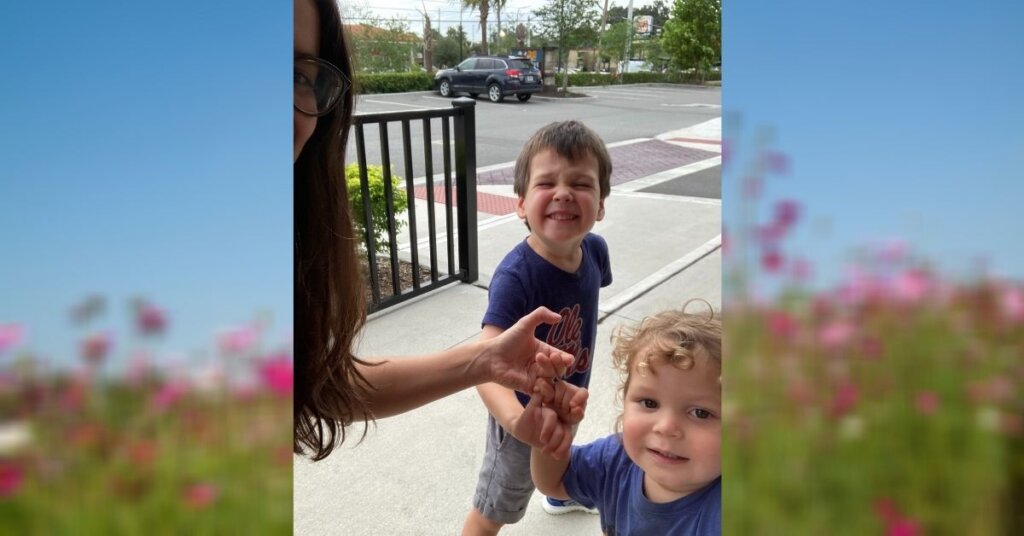
Rivera says she finds her biggest source of inspiration in today’s youth. She has two children, aged 2 and 4, who amaze her with their unwavering drive to learn and progress. Rivera does her best to raise her children with open minds, something that wouldn’t have been possible when she was growing up.

We’ve been celebrating Pride in Orlando, and I was explaining to my son about Pride, and it was such an easy conversation, and I think back to when I was young, and how that wouldn’t have been an easy conversation…what a special gift.

The new generation’s awareness of the world and their interconnectedness brings her hope. She sees the youth as a powerful force for positive change.

They want to tackle the big issues, they want to get to a better place. There’s nothing more hopeful than that.

Activism can be grueling work, so Rivera looks toward youth movements when her work leaves her emotionally drained, “You need that kind of excitement and energy because it’s exhausting.”

You May Also Like:

*****
Back To Front Page